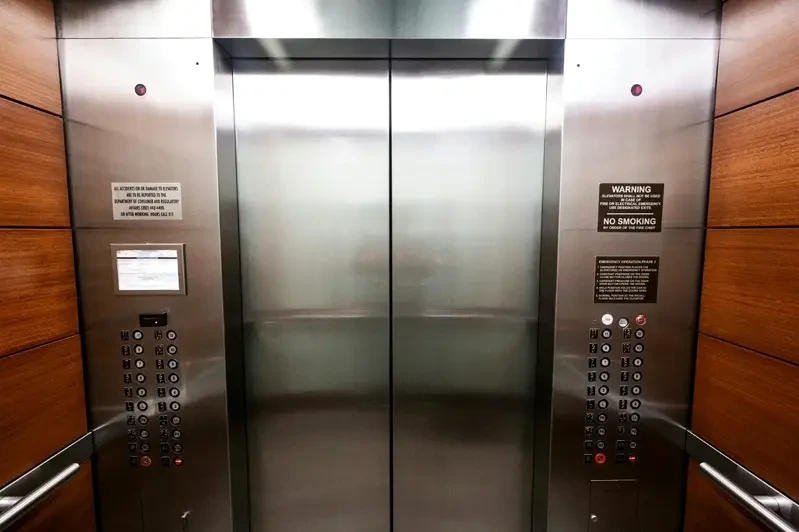
While global capital frantically chases AI and data centers, a business touching the lives of 2.5 billion people every day is quietly generating stable, decades-long cash flows. The global elevator market exceeds $14 billion; factors ranging from urban expansion and aging populations to the rise of smart buildings continue to drive massive, essential demand. For this century-old elevator company, the true “gold mine” lies not in equipment sales, but in the enduring opportunity for maintenance services that generate steady revenue for decades.
Quality Tested by Extreme Conditions; Global Opportunities in Vertical Mobility
Every time an elevator door opens and closes, 2.5 billion people worldwide rely on the system for vertical transport, fueling a massive global supply chain worth $14 billion.
A Global Senior Vice President at the company noted that elevators must operate smoothly amidst environmental challenges—such as humidity, salinity, temperature fluctuations, and corrosion—across a wide range of extreme conditions.
From the Eiffel Tower and the Burj Khalifa to the Empire State Building, this century-old brand has established a deep footprint, with operations spanning over 200 countries. However, facing the recent capital-heavy AI boom and the end of rapid growth in China’s construction sector, the company is redefining its strategic direction.
The company’s CEO stated that the convergence of urbanization, digitalization, mobility needs driven by aging populations, and infrastructure modernization creates a market impact that rivals the recent data center expansion—and will persist for decades to come.
Shifting Demographics Drive Essential Demand: Any Building Over Two Stories is a Market Opportunity
Wall Street investors are focusing not merely on how high an elevator can climb, but on the business’s resilience and ability to withstand shocks. Demographic shifts and mobility trends are powerfully catalyzing strong demand for elevators.
The CEO noted signs of recovery in the North American multi-family housing market, alongside an explosion in residential demand within high-growth markets like India. She highlighted that aging populations are further boosting mobility needs, leading to a surge in the construction of hospitals and senior living facilities; essentially, any building taller than two stories represents a prime opportunity for their products. 90% of Profits Come from Maintenance: A One-Time Install Generates Decades of Cash Flow
The real secret that drives investors to commit isn’t the sale of the equipment itself, but the subsequent maintenance and servicing. Take industry leader Otis, for example: over 90% of its profits stem from maintenance, servicing, and equipment upgrades, as it meticulously services more than 2.5 million elevators worldwide each year.
A machinery analyst at an independent Wall Street research firm noted that once an elevator is installed in a building, it will continue to operate—moving up and down—for the next 20, 50, or even 70 years. This analyst believes such a business model offers exceptional stability, allowing for precise revenue forecasting over the coming decades.
Sensors and Apps: Predictive Maintenance Transforms the Traditional Industry Model
Companies are actively turning digital technology into a competitive advantage by integrating mobile apps, remote diagnostics, and continuous sensor monitoring. This transforms traditional elevators into “nervous systems” capable of predictive maintenance.
A global senior vice president at an elevator company explained that engineers can simply place a smartphone flat on the floor to precisely measure vibrations; this allows them to detect operational anomalies in mechanical components or identify rail misalignment issues early on.
Predictive maintenance technology has fundamentally altered the industry’s development trajectory. Elevators have shed the label of mere cold, mechanical hardware, evolving instead into smart infrastructure that operates with constant connectivity.
The CEO of an elevator manufacturing company stated that the management team has decided to ramp up investment to ensure service quality meets established targets, thereby boosting customer renewal rates. She noted that this decision would drive strong growth across the service business, leading to a gradual improvement in profitability within the service sector.