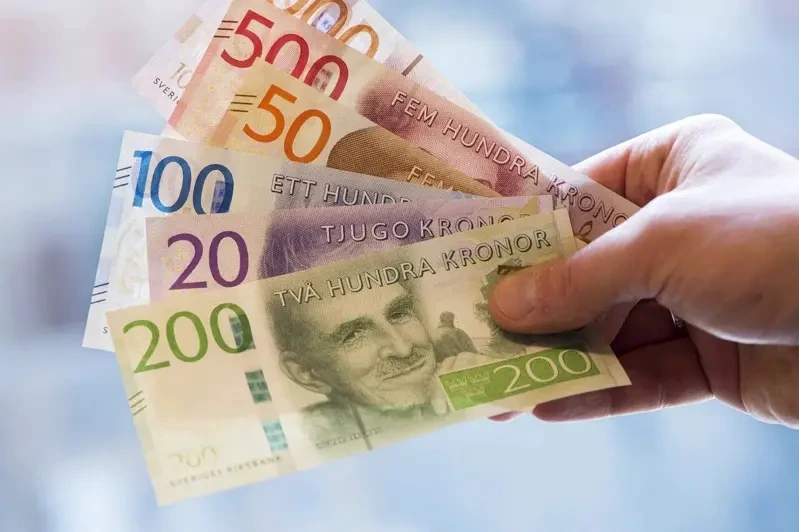
Promoting a “cashless society” has been a major policy objective actively pursued by many countries and regions in recent years. Its benefits include lowering socio-economic costs, enhancing transaction efficiency and convenience, combating the underground economy and money laundering, and fostering the development of fintech and innovation. However, nations have also begun to recognize potential risks—Sweden being a prime example.
Sweden was once predicted to become a completely cashless society by 2030. With the development of the mobile payment system “Swish,” banks gradually stopped handling cash, cash registers disappeared from shops, and the ratio of cash in circulation to GDP fell to the lowest level globally.
However, the situation changed following Russia’s invasion of Ukraine.
Sweden’s central bank realized that reliance on electronic payment systems left the country vulnerable to power outages or sabotage; consequently, it urged every adult to keep 1,000 Swedish kronor in cash at home.
The government also distributed a booklet titled If Crisis or War Comes to every household, advising citizens to use cash regularly as a “precautionary measure.”
One elderly Swede remarked, “Cash is king,” adding that “anything electronic will eventually break down.”
In July of this year, the Swedish central bank announced that essential goods stores with staffed checkout counters—including grocery stores and pharmacies—must accept cash payments.
While some Swedes welcome the return of cash, believing it reduces shopping barriers for the elderly, the majority say they will not alter their established digital payment habits.
According to the latest data from the Swedish central bank, only 5% of consumers reported that their last use of cash was for an in-store purchase; this figure stood at 10% in 2023 and as high as 40% fifteen years ago.
This trend extends beyond Sweden to other Nordic countries. A survey conducted by the Swedish central bank late last year found that only 2% of Norwegians and 8% of Danes reported using cash during their most recent in-store purchase. “I give my children a weekly allowance, yet I never use cash myself,” says Anna, a 41-year-old doctor. However, she also notes that the rise of artificial intelligence (AI) and the uncertainties of the digital age suggest that abandoning physical currency could have negative consequences.
She cites the use of computers as an example: “Sweden always wants to jump on the bandwagon when something new emerges—for instance, we introduced iPads in schools quite early on.” She adds, “But now, people realize that wasn’t necessarily a good thing; because the children didn’t use their hands, they never learned to write properly or use tools like scissors. We went a bit too far.”
There is an interesting point to be made regarding lessons from the Russia-Ukraine war. While Sweden has observed the vulnerability of electronic payment systems during wartime, Ukraine has rapidly adapted to entirely new digital systems amidst the conflict.
Data from the National Bank of Ukraine shows that nine out of ten transactions are now cashless, raising the question: Is a return to physical cash really the solution?