“Bringing in several hundred dollars a month—that’s how it is for a lot of people,” says Wei Ying (a pseudonym), a 70-year-old senior who once lived in Flushing, New York, before moving to Chicago a year ago. She explains that while living in the Flushing area, friends told her she could go to certain pharmacies to “pretend to pick up medication” as a way to make money—a scheme she eventually joined in on.
Wei Ying notes that in New York, beyond the “steady income” from pharmacies, those with Medicare or Medicaid could also receive monthly kickbacks of $700 by attending local adult day care centers. “Looking back now, it really doesn’t seem right.”
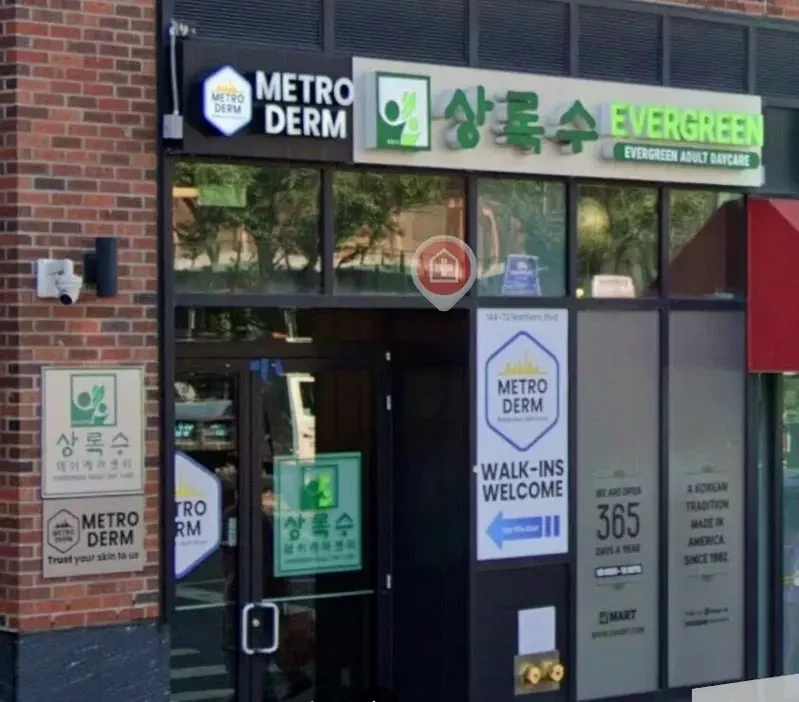
The distribution of kickbacks by adult day care centers in the New York area is an “open secret” among many elderly Chinese immigrants. According to Wei Ying, all one has to do is hand over their Medicare or Medicaid card—without needing to perform any actual activities—to receive a monthly “cash rebate” ranging from $500 to over $1,000. The exact amount depends on how fiercely these day care centers compete to recruit new members.
Boosting Kickbacks by Switching Centers
Wei Ying recalls that five years ago, shortly after turning 65, she joined an adult day care center in Flushing. At the time, there was a proliferation of such services. When she and a close friend first signed up at the same center, they each received about $500 a month. As competition among these centers intensified, “you could get a higher kickback just by ‘switching’ to a different center.” Wei Ying says that three years later, she was receiving $700 a month from the day care center alone. With no home or car, a small amount of savings, and the addition of Supplemental Security Income (SSI), she was easily bringing in over $1,000 a month—”the benefits were truly generous.” Wei Ying describes that joining a senior day center does not require a fixed, full-day presence. Participants simply need to sign in at the center between Monday and Friday morning to easily receive a cash rebate. “Some people leave right after signing in, and I sometimes head out early if I have other things to do, but most of the time I stay to play mahjong and enjoy a free lunch.”
However, some industry observers point out that if adult day centers use cash incentives to attract eligible seniors, it may raise concerns regarding the misuse of medical benefit systems. Properly operated adult day services should focus on care, health management, and social activities, rather than serving primarily as a source of financial incentives.
Irregularities in Pharmacies: Profiting from Prescription Drugs
Regarding the high density of local pharmacies, Wei Ying and another source familiar with the matter state that some pharmacies generate massive profits through prescription drugs—specifically those that are medically unnecessary, never actually dispensed, or prescribed solely due to illegal kickbacks. This distorts market competition and places increasing survival pressure on pharmacies that operate in full compliance with the law.
According to the interviewees, one lucrative avenue for these pharmacies involves beneficiaries of Medicare Advantage plans, Medicare Part D, or Medicaid. In some pharmacies, these individuals can effectively convert their over-the-counter (OTC) benefits into cash rebates.
The source noted that OTC benefit policies vary by state under the Medicaid program. In Illinois, for example, these benefits are generally restricted to eligible items like fish oil or vitamins, with a quarterly allowance of approximately $140. Yet, some pharmacies within the Chinese-American community allow seniors to use their medical benefit cards to obtain cash rebates, or to exchange their benefits for high-end food items such as abalone or dried scallops. According to insiders, some pharmacies have been profiting from prescription drugs through schemes involving “no medical necessity, failure to actually dispense the medication, or the use of illegal kickbacks.” For instance, elderly individuals who do not suffer from hypertension might obtain prescriptions for high-blood-pressure medication every month; these “fake patients” then receive cash kickbacks from the pharmacy in exchange. As the number of such “fake patients” grows, the resulting illicit gains become substantial, allowing both the physicians and the pharmacies involved to profit.
Increased Enforcement Leads to a Decline in Illicit Practices
However, sources indicate that due to intensified efforts by law enforcement to crack down on Medicaid fraud and the abuse of medical insurance, the practice of exchanging prescriptions, medical equipment, or physician orders for cash has significantly diminished in the Flushing area.
An industry insider noted that some elderly individuals reported being approached by Chinese-speaking investigators who asked, “How much money do you get when you pick up your medication at the pharmacy?” Fearing they might be implicated, the seniors provided honest accounts. Amidst this heightened scrutiny, some pharmacies—anxious about the prospect of an investigation—have ceased these illicit operations.
Many legitimately operated pharmacies have expressed that they can no longer tolerate this situation, where “bad money drives out good.” When certain operators use illegal kickbacks, cash incentives, or other improper tactics to attract customers, law-abiding pharmacies are placed at a disadvantage, creating an unfair competitive environment that threatens their very survival.